BSM3 / BATTERY
Alarm within 20 seconds of first venting in third-party testing.
BSM3 detects hydrogen in cell off-gas and sends an alarm to your BMS.
Tested by TÜV Rheinland Taiwan on an overcharged LFP cell. See the results below ↓
Discuss your application →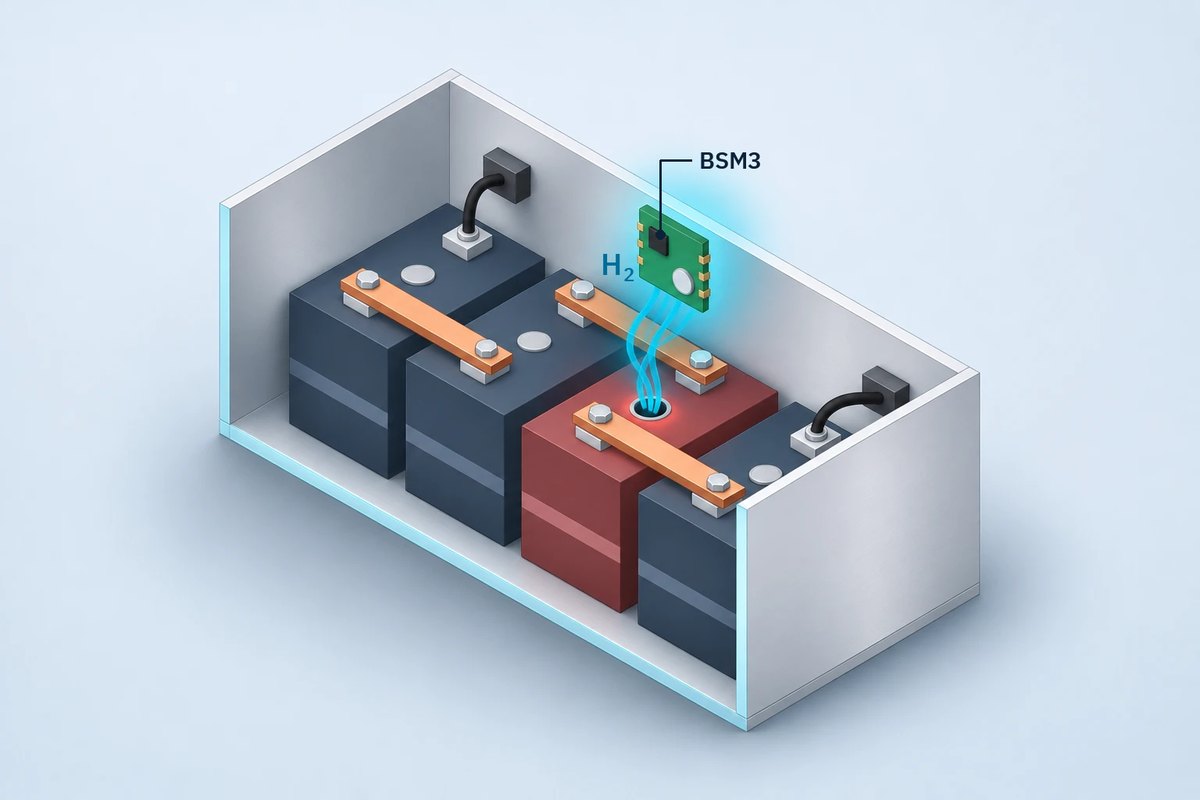
Third-party test · TÜV Rheinland Taiwan · Report CN25DAKO 001
16 sSample 1
20 sSample 2
17 sSample 3
Time from first cell venting to BSM3 alarm
① LFP cell② BSM3 × 3 (on lid)③ Alarm beacons
Test conditions
- LFP cell, 3.2 V / 25 Ah
- Overcharged at 0.5C until first venting
- 20 L enclosed test box, 25 ± 5 °C ambient
WHAT HAPPENS NEXT
Turn the alarm into action.
BSM3
Detects hydrogen
GPIO alarm
BSM3 provides the alarm. Your BMS determines the response.
WORK WITH TIPS
From your setup to on-site evaluation.
Share your setup
Tell us about your pack, the challenge you face and where you need early warning.
Review the fit
Pack enclosure, operating temperature, mounting position, and BMS input.
Evaluate on site
Evaluate detection and the BMS response in your pack design.
Working on a battery pack or ESS?
Tell us about your pack and where you need early warning.