BSM3 / HYDROGEN
Know when hydrogen leaks at the fitting.
BSM3 detects hydrogen at flanges and fittings and sends an alarm to your controller.
Discuss your application →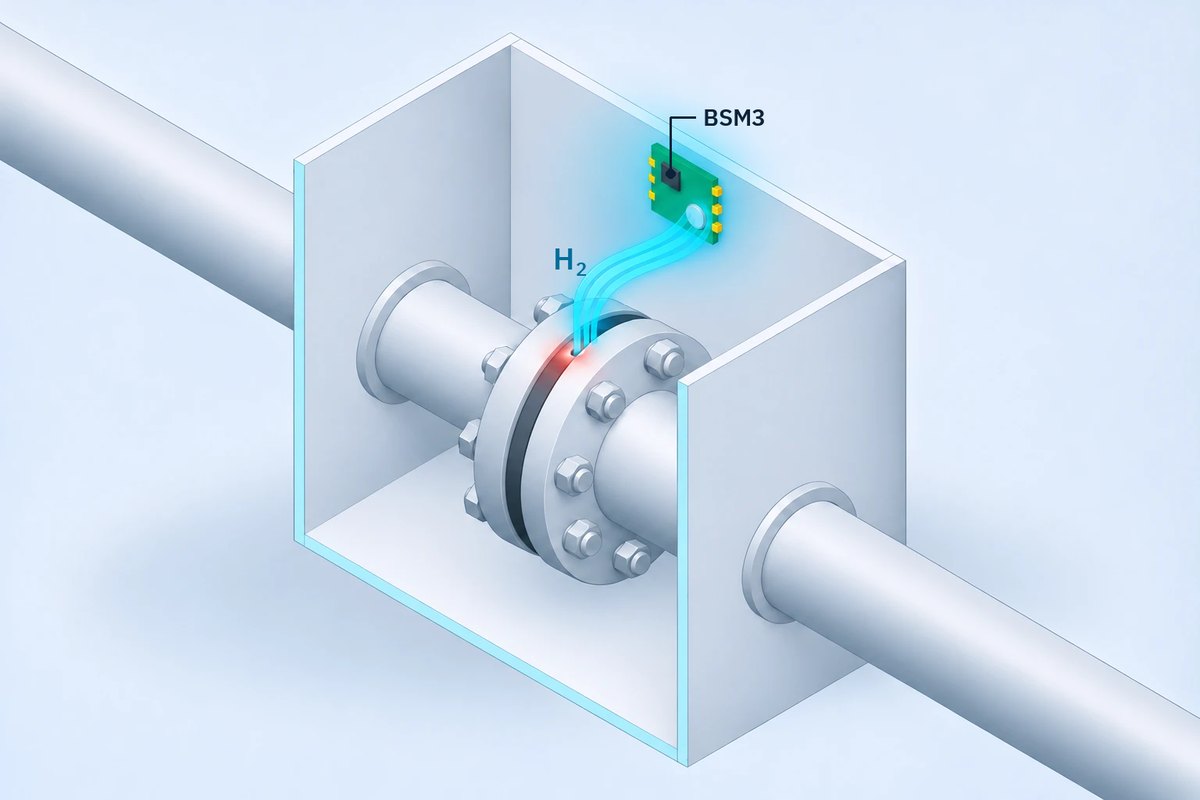
TESTED IN THE LAB
Exposed to 100% H₂. Still responding.
Sensor response time (t90) · Median of 8 BSM3 modules
All 8 modules responded normally at 10% and 1% H₂ after exposure to 100% H₂.
1% H₂ = 25% of the lower flammable limit.
Measured by TIPS at the Industrial Technology Research Institute (ITRI) laboratories, Taiwan.
FIELD TRIAL
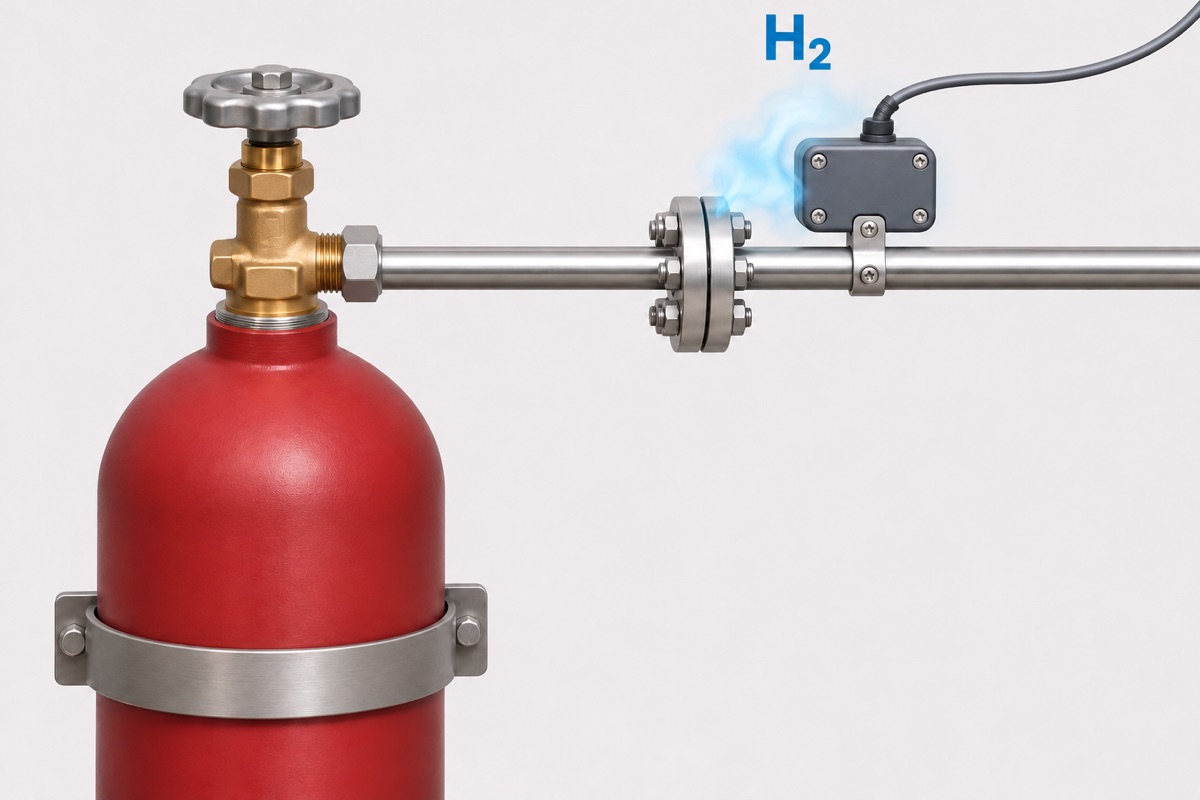
Tested on site in Taiwan
- Taiwan
- Hydrogen cylinder supply site
- Routine hydrogen release events detected
At a leaking fitting, local hydrogen concentration can be far higher than in open air. BSM3 is tested up to 100% H₂.
WHAT HAPPENS NEXT
Turn the alarm into action.
BSM3
Detects hydrogen
BSM3 provides the alarm. Your controller determines the response.
WORK WITH TIPS
From your setup to on-site evaluation.
Share your setup
Tell us about your equipment, potential leak points and the challenge you want to solve.
Review the fit
Sensing location, enclosure, indoor or outdoor use, and controller input.
Evaluate on site
Evaluate detection and the controller response in your actual setup.
Working with hydrogen equipment?
Tell us where hydrogen could leak in your system.